Mar. 17th, 2004
Now Showing, "Spirituality": How Media & Popular Culture Affect Teens
Lynn Schofield Clark, Ph.D. Professor, CU School of Journalism and Mass Communication, Author
Interface Host: Lois Mabari
About the Presentation:
Now Showing, "Spirituality": How Media & Popular Culture Affect Teens
Television programs and films that raise intriguing questions about the realm beyond - especially things that remain unexplained by science - become particularly interesting in the current situation, when an increasing number of young people grow up with little or no experience with formal religion. Research grounded in in-depth interviews with teens and their families enables Clark to offer insights into how the entertainment media are playing a role in shaping contemporary ideas that in turn shape cultural practices and institutions
About the Presenter:
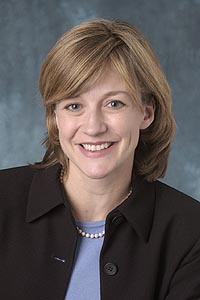 |
Lynn Schofield Clark, Ph.D., is Assistant Research Professor at the University of Colorado's School of Journalism and Mass Communication, Director of the Teens and the New Media @ Home Project, and author of From Angels to Aliens: Teenagers, the Media, and the Supernatural (Oxford University Press, 2003), and is co-author of Media, Home, and the Family (Routledge University Press, 2003). A former television producer and marketing professional, Clark has volunteered with young people in various capacities for almost two decades. |
Interface Information:
- “Nature’s Choice: What Science Reveals About the Biological Origins of Sexual Orientation.”
- Nature’s Choice is a slide presentation with extensive audience interaction. It is educational, describing how our sexuality develops both physically and behaviorally. It tries to help people integrate who they are as people with their own sexuality. It presents and elaborates the idea that denial of our sexuality denies our humanity and impairs our spiritual development.
- Cheryl L. Weill, Ph.D., MSW
- Ph.D., MSW
- Clinical Social Worker in private practice: The Boulder Therapist.net
- Photo
- Biographical Sketch
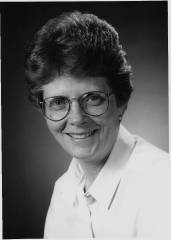
Dr. Cheryl Weill received a B.S. degree from the College of Chemistry at the University of California at Berkeley in 1969 and a Ph.D. degree in chemistry from the University of California at Santa Barbara in 1974. After additional training in molecular neuroscience at Cold Spring Harbor Laboratories, Columbia University College of Physicians and Surgeons, Woods Hole Marine Biological Laboratories, and Harvard Medical School she embarked on an independent research and teaching career in the Departments of Neurology and Anatomy and the Neuroscience Center at Louisiana State University Health Science Center in New Orleans, Louisiana. Her research was supported by the National Institutes of Health and the National Science Foundation and concerned the survival of neurons during development, and the identification of the genes and the molecular signals used by neurons for their survival. She retired from academic science in 1999, obtained a Masters of Social Work degree from the University of Denver in 2001, and is licensed as a LSW and in private practice in Boulder, CO.
Nature’s Choice was developed to address the newer scientific work on the biology of sexual orientation. It is intended for lay audiences and strives to not be scientific, but rather informative. An effort is made to engage the audience in personal experiments that help people understand their own sexuality and its discovery process. Dr. Weill has presented Nature’s Choice 44 times to various educational and social organizations over the past 10 years.
- Testimonials
for Nature’s Choice presentation.
“The research and work that have been done by Dr. Cheryl Weill are extremely important to all of us in this world who have had such horrid misunderstandings about the development of sexual orientation. As a minister for 46 years I have watched my own United Methodist Church and so many other denominations and religious groups use serious misunderstandings to develop hardened doctrine condemning any sexual orientation that is not heterosexual.
Dr. Weill’s presentations are so professional and based on such comprehensive research and scientific knowledge about this issue that I wish everyone in the world could have a chance to hear her and talk with her about this.
We all recommend her as a person, as a scholar, and as a presenter. She is the very best at what she does”.
Reverend Don Sinclair, D. Min.
“As the president of a presentation skills training firm, I an writing to both endorse and recommend Dr. Cheryl Weill.
The medical and science worlds are notorious for producing public speakers that while academically brilliant, often fail to communicate in such a way that audiences can connect with them. Cheryl Weill is a refreshing exception. She knows how to shape a presentation for the ear of her listener. More than an accomplished academician, Dr. Weill has an uncommon capacity as a public speaker to reach out and relate her material to others.
She is a credible, memorable speaker. The information she presents promotes the understanding of important science, and helps diminish ignorance and prejudice.”
Whit Sanders, President
SPEECH PRO
“Your presentation persuades, informs, and entertains. Consequently, your audience leaves convinced, informed, and appreciative of you. Significantly impacted by your program”.
William J. Littell, Ph.D.
Clinical and Consulting Psychologist
Presentation Handout
Nature’s Choice:
What Science
Reveals About the Biological Origins of Sexual Orientation.
Cheryl L. Weill, Ph.D., MSW
Definition: sexual orientation - the direction of sexual feelings or behavior toward the same sex (homosexual), opposite sex (heterosexual), or some combination of the two (bisexual). Alternatively: affectional orientation.
· Homosexuality is not a mental disorder. In 1973 the American Psychiatric Association removed homosexuality from its official Diagnostic and Statistical Manual signifying the end to its official classification as a disease.
· Homosexuality is not pedophilia. The sexual desire of pedophiles is directed towards children and can have a heterosexual, homosexual, or bisexual orientation.
· There is no evidence that childhood sexual abuse alters sexual orientation.
Neurohormonal-Gestational theory: Put forward in “Neurohormonal Functioning and Sexual Orientation: A Theory of Homosexuality-Heterosexuality,” Ellis, L. and Ames, M.A. Psychological Bulletin, 101:233-258 (1987). Sexual orientation in all mammals is primarily determined by the degree to which the nervous system is exposed to testosterone and certain other sex hormones during gestation.
Predictions of theory:
a. Homosexuals should have higher frequencies of other sex-typical behaviors normally associated with the opposite sex.
b. Relationships between parents and homosexual offspring often may be strained and/or assume some cross-sex characteristics.
c. Homosexuality should reflect a significant degree of hereditability.
d. Average neurohormonal differences should exist between homosexuals and heterosexuals in both sexes at comparable ages.
e. Attempts to alter sexual orientation after birth should be minimally effective.
f. Homosexuality should be primarily a male phenomenon.
Sexual development occurs both morphologically and neurologically.
Morphological development: In the absence of any hormonal influence, genetically male and female fetuses will develop morphologically as female. Male sexual development requires testosterone and its derivatives dihydrotestosterone and estrogen. Female sexual development can occur in either the presence or absence of estrogen. The sex hormones that operate during development are produced in the fetus, by either the testes or ovaries and the adrenal glands.
Neurological development: Sexual orientation is associated with the establishment of permanent differences in the hypothalamic and limbic areas of the brain. Sex-typical behavior patterns are associated with changes in diverse areas of the brain and extensively involving the cortex.
Animal studies, primarily of rats or primates, demonstrate that neurological development, as assessed behaviorally, can be inverted by altering the availability of testosterone during a critical period. Elimination of circulating testosterone in males during the critical period results in reduced male-typical behavior and display of female-typical behavior. Similarly, increasing the availability of testosterone to developing females results in reduced female-typical behavior and display of male-typical behavior. The same manipulations carried out after the critical period do not affect the normal development and expression of sex-typical behavior in either males or females.
These and additional observations suggest that testosterone masculinizes selected areas of the brain and de-feminizes other areas to provide for male-typical behavior.
Observations of normal animals demonstrate that sex-typical behavior correlates with the circulating levels of testosterone during gestation.
The human conditions, androgen insensitivity, 5-alpha-reductase deficiency, congenital-adrenal-hyperplasia, and Turner’s syndrome support the conclusion that sex-typical behavior correlates with the circulating levels of testosterone during gestation.
The area of the brain known to be sexually dimorphic from animal and human studies is the hypothalamus.
Anatomical data:
1. Swaab, D.F. and Hofman, M.A. An enlarged suprachiasmatic nucleus in homosexual men. Brain Res. 537: 141-148 (1990).
2. LeVay S. A difference in hypothalamic structure between heterosexual and homosexual men. Science 253: 1034-1037 (1991).
3. Allen, L.S. and Gorski, R.A. Sexual orientation and the size of the anterior commissure in the human brain. Proc. Natl. Acad. Sci. USA 89: 7199-7202 (1992).
Genetic data:
1. Bailey, J.M. and Pillard, R.C. A genetic study of male sexual orientation. Arch. Gen. Psychiatry 48: 1089-1096 (1991).
2. Bailey, J.M., Pillard, R.C., Neale, M.C., and Agyei, Y. Hertitable factors influence sexual orientation in women. Arch. Gen. Psychiatry 50: 217-223 (1993).
3. Hamer, D.H., Hu., S., Magnuson, V.L., Hu, N., and Pattatucci, A.M.L. A linkage between DNA markers on the X chromosome and male sexual orientation. Science 261: 321-327 (1993).
The genetic data do not at this time unequivocally support the idea that there is a gay gene. These data need to be replicated on a 10-fold larger population. It is still unlikely that there is a single gene that codes for a complex behavior like sexual orientation or sex-typical behavior. It seems more likely, that unlike eye color, which is associated with a single gene, sexual orientation results from a subset of traits, associated with a number of genes and gestational environmental factors, that together give rise to a complex behavior.
Conclusion: Homosexuality is naturally determined through normal developmental processes and represents one end of a continuous spectrum of accessible sexual behaviors.
Further reading:
1. Brain Sex, Anne Moir & David Jessel, Dell Publishing, New York, NY, 1991.
2. Discover (magazine) Vol. 3, Number 6, June 1992.
3. The Sexual Brain, Simon LeVay, MIT Press, Cambridge, MA, 1993.
4. The Science of Desire, Dean Hamer & Peter Copeland, Simon and Schuster, NY, 1994.
5. Sex on the Brain, Deborah Blum, Penguin Putnam, Inc., NY, 1997.
Contact: [email protected] or 303-442-8242. See also www.natures-choice.info
5/02